The missing half of an Android test claim
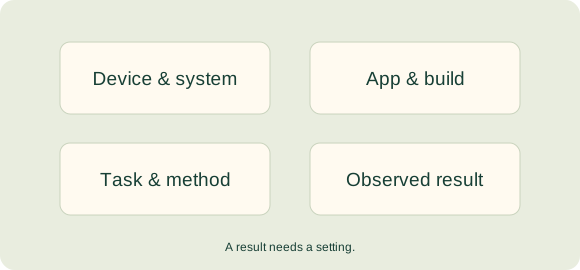
Statements such as “tested on Android” sound concrete at first glance, yet they leave almost every crucial parameter undefined. Which specific smartphone model was used? Which Android operating system release or custom skin was running? Which exact app package build was evaluated? What specific task was attempted?
An Android test claim only becomes genuinely useful when those questions have clear, visible answers. A static screenshot of an app's opening screen is never proof that every internal feature functions correctly, nor does a successful navigation test on one flagship phone guarantee identical behavior across budget devices.
Why a structured test record beats a generic badge
| Field | What a reader should be able to verify |
|---|---|
| Device and system | The exact hardware environment and Android OS version, rather than a broad label like “Android”. |
| App identity and build | The specific software package name and version release examined during the check. |
| Task definition | The precise user action, menu navigation, or screen interaction that was tested. |
| Observation | An objective account of what actually occurred, including any limitations or errors encountered. |
| Date and method | When the evaluation took place and the exact methodology applied. |
This structured checklist represents recommended reporting standards for app analysis. It is not presented as a record of empirical app tests carried out directly by PattiCheck.
An SDK requirement is not an experience measurement
Official Android Software Development Kit (SDK) requirements define fundamental platform compatibility thresholds. However, a minimum system requirement must never be misinterpreted as a real-world performance guarantee for every compatible handset.
For instance, a baseline system requirement and an observed application response time answer entirely different questions. Variations in available RAM, processor throttling, network latency, and custom device builds can drastically alter the context of any practical user observation.
Keeping analytical conclusions close to the observed task
If the only verifiable observation during an inspection is that a specific app screen successfully opened, state precisely that. Avoid stretching a minor interaction into sweeping claims such as “all payments verified,” “every device fully supported,” or “guaranteed secure.” Validating those assertions requires extensive empirical testing and specialized security auditing expertise beyond basic usability checks.
Transparently acknowledging analytical limitations is a core pillar of credible reporting. Readers benefit immensely from knowing precisely what was not examined before drawing conclusions about a claim's validity.
What PattiCheck has actually done
Our work focuses on auditing our own website pages, layout accuracy, and educational reading tools. We have not conducted hands-on APK testing or device compatibility trials for Teen Patti Master. Routine website layout checks must never be mislabeled as empirical app-device tests.
Review our review framework for a detailed breakdown of evidence categories, or read our editorial policy to understand how all statements are rigorously attributed.
Sources & reading notes
- Android Developers: Understanding uses-sdk platform requirements ↗
- Android Developers: Version names, codes and platform compatibility ↗
Sources checked 27 October 2026. References support the stated context and do not constitute an endorsement of any third-party app or service. How we use sources.